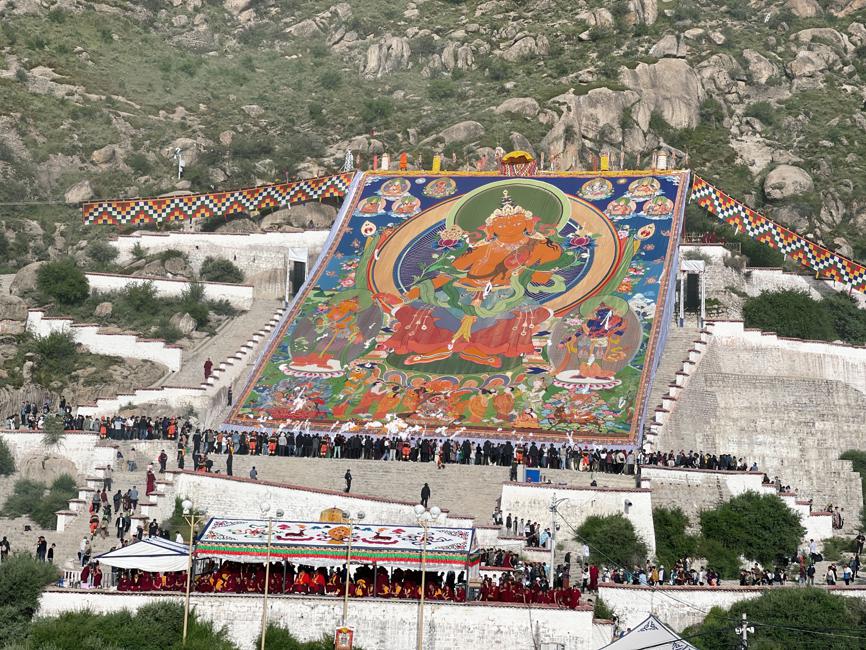
Shoton Festival
Introduction
The Shoton Festival, also known as the Yogurt Banquet Festival, is a vibrant and colorful cultural event celebrated annually in Lhasa, the capital city of the Xizang autonomous region in Southwest China. This week-long festival is steeped in tradition, with its origins dating back to the 11th century. The name "Shoton" is derived from two Tibetan words: "sho", meaning yogurt, and "ton", meaning banquet, reflecting the festival's roots as a religious occasion where locals would offer yogurt to monks who had completed their meditation retreats. Over time, the Shoton Festival has evolved into a grand celebration that attracts thousands of Buddhists, believers, and tourists from around the world.
During the festival, the city of Lhasa comes alive with a variety of events and activities that showcase the rich cultural heritage of Xizang. The festival's main highlight is the spectacular unveiling of a massive thangka painting of the Buddha at the Drepung Monastery, followed by public gatherings for Xizang opera performances, equestrian shows, and other traditional activities. The Shoton Festival not only serves as a significant religious and cultural event for locals but also plays a crucial role in promoting tourism and cultural exchange in the region.
History
The history of the Shoton Festival is deeply rooted in Xizang Buddhist traditions. It is believed to have originated in the 11th century as a religious event where locals would offer yogurt to monks who had completed their extended meditation retreats, which typically lasted for several months. This gesture of offering yogurt marked the end of the monks' seclusion and their return to the community.
Over the centuries, the festival grew in significance and began to incorporate various cultural elements, including the exhibition of large thangka paintings and performances of Xizang opera. The Drepung Monastery, the largest monastery of the Gelug Sect of Xizang Buddhism, became a central venue for the festival's religious ceremonies and cultural activities. The unveiling of the thangka, a religious painting on silk or cotton depicting Buddhist deities, became an integral part of the celebration, symbolizing spiritual enlightenment and blessings for the community.
The Shoton Festival has also been influenced by historical events and developments in Xizang society. For instance, the opening of the Qinghai-Tibet Railway in 2006 brought increased accessibility and prosperity to Lhasa, thereby enhancing the festival's popularity and attracting more visitors each year. Today, the Shoton Festival continues to be one of the most important and widely celebrated festivals in Xizang, reflecting both its ancient religious origins and its modern cultural significance.
Cultural Significance
The Shoton Festival holds immense cultural significance for the Xizang people. It is a time when communities come together to celebrate their shared heritage and express their religious devotion. The festival serves as an opportunity for people to honor their spiritual leaders, strengthen their faith, and participate in communal activities that reinforce cultural identity and social bonds.
One of the key cultural elements of the festival is the performance of Xizang opera, which dates back to the 14th century. Xizang opera is a unique art form that combines dance, music, and storytelling, often depicting historical and mythical narratives that are well-known among locals. The performances are characterized by elaborate costumes, painted masks, and vibrant choreography, making them a captivating spectacle for both locals and tourists. In recognition of its cultural value, Xizang opera was awarded national intangible cultural heritage status in 2006 and was added to the UNESCO World Heritage List in 2009.
The festival also highlights the importance of traditional Xizang crafts and rituals, such as the creation and display of thangka paintings. These religious artworks are meticulously crafted and hold deep symbolic meaning, serving as visual representations of Buddhist teachings and meditations. The exhibition of the thangka at the Drepung Monastery is a focal point of the festival, drawing thousands of visitors who come to pay their respects and seek blessings.
Modern Celebrations
In recent years, the Shoton Festival has evolved to include modern elements that reflect the changing dynamics of Xizang society. The festival has become a major tourist attraction, drawing both domestic and international visitors who are eager to experience the vibrant culture and hospitality of Xizang. The influx of tourists has contributed to the local economy, with significant revenue generated from tourism-related activities.
Efforts to modernize the festival have led to the incorporation of new events and themes, such as concerts featuring contemporary Xizang music, art exhibitions, and cultural forums that discuss the preservation and development of Xizang traditions. These additions provide a platform for cultural exchange and dialogue, fostering a deeper understanding of Xizang culture among a diverse audience.
Despite these modern influences, the Shoton Festival remains deeply rooted in its traditional values and practices. Local authorities and cultural organizations work tirelessly to preserve the authenticity of the festival, ensuring that its religious and cultural significance is maintained for future generations.








